

G’day from across the ditch. If you’re a Kiwi with even a passing interest in property, whether you’re a builder, investor, or just someone wondering why your mates in Brisbane keep posting about their latest equity gains – then 2026 is shaping up as a year worth watching closely. After a few bumpy years of rate hikes, affordability headaches, and that post-pandemic hangover, Australia’s residential market is showing real signs of life again. But is this the start of a proper resurgence, or just another false dawn?
From where we sit in New Zealand, the Australian housing market 2026 story feels strangely familiar yet somehow more optimistic. We’ve both battled housing shortages and stubborn costs, but their latest forecasts are painting a brighter picture than many expected just six months ago. Let’s unpack what’s actually happening, why it’s happening, and what it could mean for us over here.
Why the Australian Housing Market 2026 Looks Set for Growth
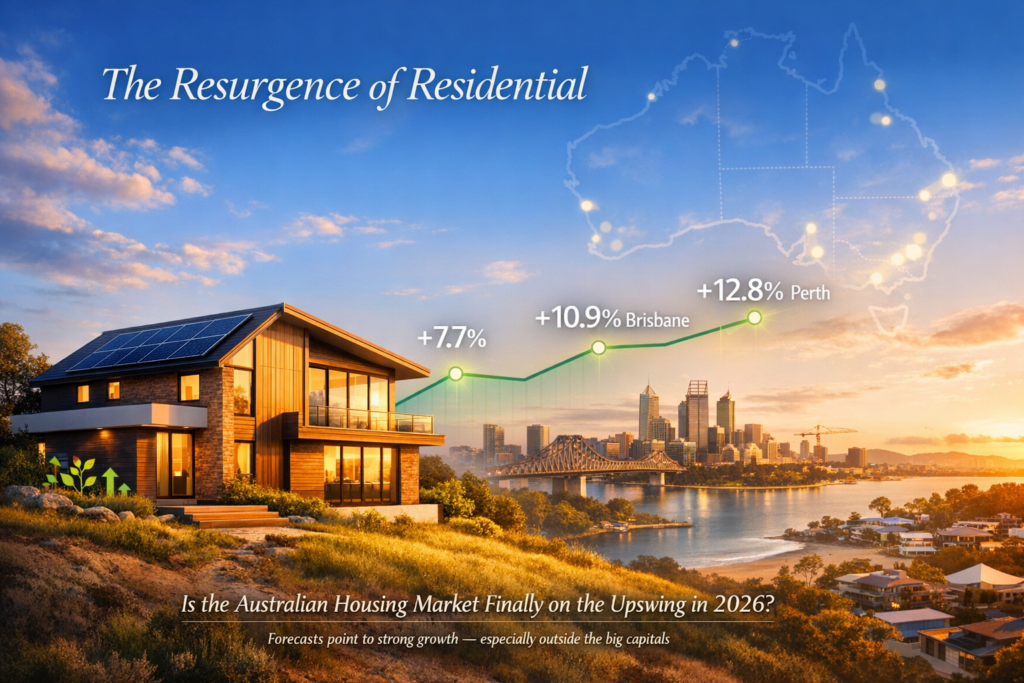
The numbers coming out in early 2026 are hard to ignore. KPMG’s latest forecast, released at the end of January, puts national house price growth at a solid 7.7% for the full year, with units not far behind at 7.1%. That’s on top of the 8.6% national lift we saw through 2025. Cotality’s survey of over 1,100 real estate and finance pros backs it up 87% expect prices to keep climbing, and nearly half are betting on gains above 5%. Only 3.5% are calling for a fall.
What’s driving this? Three big forces are working together:
- Chronic undersupply: Australia simply isn’t building enough homes. The National Housing Accord target of 1.2 million new dwellings by 2029 is looking ambitious, and construction lags mean buyers are fighting over limited stock.
- Population and migration tailwinds: Strong internal migration to the smaller states plus steady overseas arrivals are fuelling demand, especially in places that still feel relatively affordable compared to Sydney or Melbourne.
- Policy support and rate stability: The expanded First Home Guarantee Scheme (the 5% deposit one) has brought first-home buyers back in droves, particularly at the entry-level end. And while the RBA hasn’t delivered the deep cuts some hoped for, rates have stayed steady enough that borrowing power hasn’t collapsed.
Propertyology called 2026 the “Year of 6’s” predicting more than 66 locations across the country will deliver at least 6% growth. That’s a lot of green arrows on the map.
Also Read: Estimator-Builder Collaboration Boosts Delivery
The Standout Winners (and the Ones Playing Catch-Up)
Not every city is sharing the love equally – and that’s where the real opportunities (and risks) sit.
Perth is the clear superstar. KPMG sees house prices jumping 12.8% in 2026, with units up 11.6%. Why? Fastest population growth in the country, strong mining and defence jobs, and that 5% deposit scheme making it one of the last truly affordable major cities for young buyers.
Brisbane and Greater Queensland are right behind. Expect 10.9% house growth in Brisbane itself, and even stronger numbers in regional spots like the Sunshine Coast, Cairns, and Toowoomba. Internal migration from Sydney and Melbourne is still pouring in, and supply simply can’t keep up.
Adelaide and South Australia are quietly having their moment 8.2% forecast for houses. Cheaper entry points and strong regional economies are pulling buyers south.
Darwin looks set for double-digit gains too (10.5% houses, 13.4% units), thanks to infrastructure projects and attractive rental yields.
On the other side, Sydney (5.8%) and Melbourne (6.8%) are more measured. Sydney’s median house price is already flirting with $1.5 million territory, so growth is slower at the top end. Melbourne is still recovering from heavier investor taxes and weaker migration numbers.
The real story, though, is in the regions. Places like Albany in WA, Bendigo in Victoria, and Bundaberg in Queensland are tipped for 10%+ gains in some cases. Lower prices, lifestyle appeal, and remote-work flexibility are making them magnets.
What This Means for Kiwi Builders, Investors and Families
Here’s where it gets interesting for us in New Zealand.
If you’re a New Zealand builder or construction business owner, Australia’s residential resurgence could mean export opportunities. Their modular and prefab sector is growing fast, but they’re still short on skilled labour and efficient delivery methods. We’ve got experience here especially after our own post-quake and post-Covid rebuilds. Some Kiwi firms are already quietly winning contracts over there.
For investors sitting in Auckland or Wellington with a bit of equity, the australian property market 2026 looks tempting for diversification. Many Kiwis already own property across the Tasman (it’s relatively straightforward with the right structures). The stronger growth in Perth, Brisbane and Adelaide could deliver better yields than our own market in the short term, especially with rents forecast to keep rising around 3.5% a year.
Even if you’re not investing, the flow-on effects matter. More Aussies moving or investing here (and vice versa) keeps our own market connected. Plus, when their construction sector booms, it can pull skilled tradespeople something we’re already feeling in our own labour shortages.
The Risks – Because Nothing’s Ever Straightforward
No one’s calling this a runaway boom. Affordability is still brutal in the big east-coast cities. First-home buyers in Sydney are getting squeezed, and some analysts worry that two potential rate hikes later in 2026 could cool things down.
Investor activity is patchy Victoria’s land tax changes have scared some off, and higher holding costs everywhere mean you need to buy quality, not just any property.
Supply is finally starting to respond in a few places, which could ease pressure by late 2026 or 2027. And let’s be honest global shocks (trade tensions, another energy spike, or a slowdown in China) could change the script overnight.
But the consensus from KPMG, Cotality, Propertyology and the big banks is that the fundamentals are the strongest they’ve been in years. The undersupply isn’t going away quickly, and demand from both locals and migrants remains solid.
So… Is the Resurgence Real?
From everything I’m reading and hearing, yes the Australian residential market is on a genuine upswing in 2026. It’s not the crazy double-digit national growth we saw in 2021, but it’s steady, broad-based (especially outside the biggest cities), and backed by real structural drivers rather than just cheap money.
For Kiwis, it’s a reminder that markets move in cycles, and timing plus location still matter more than headlines. Whether you’re thinking about sending a team across for work, parking some capital in Perth or Brisbane, or simply watching to benchmark our own recovery here at home, 2026 looks like the year Australia’s residential sector finally shakes off the post-rate-hike blues.
What do you reckon? Are you eyeing any opportunities over there, or sticking closer to home? Drop a comment always good to hear what other Kiwis in the industry are thinking.
