

Picture this: It’s early 2025, and you’re leading a team on a sleek office build in Melbourne. The sun’s shining, the client’s thrilled with the renders, and your initial bid looks rock-solid. Fast forward six months, and suddenly you’re staring down a 15% overrun. Materials spiked, a surprise soil issue doubled foundation costs, and those “quick” client tweaks snowballed into a nightmare. Sound familiar? If you’re a construction executive, senior quantity surveyor, or big contractor down under, you’ve likely lived this story or heard it from a mate over a coffee. In Australia’s booming market, where infrastructure pushes and housing crunches drive projects big and small, construction budget overruns aren’t just headaches. They eat profits, strain relationships, and can tank reputations.
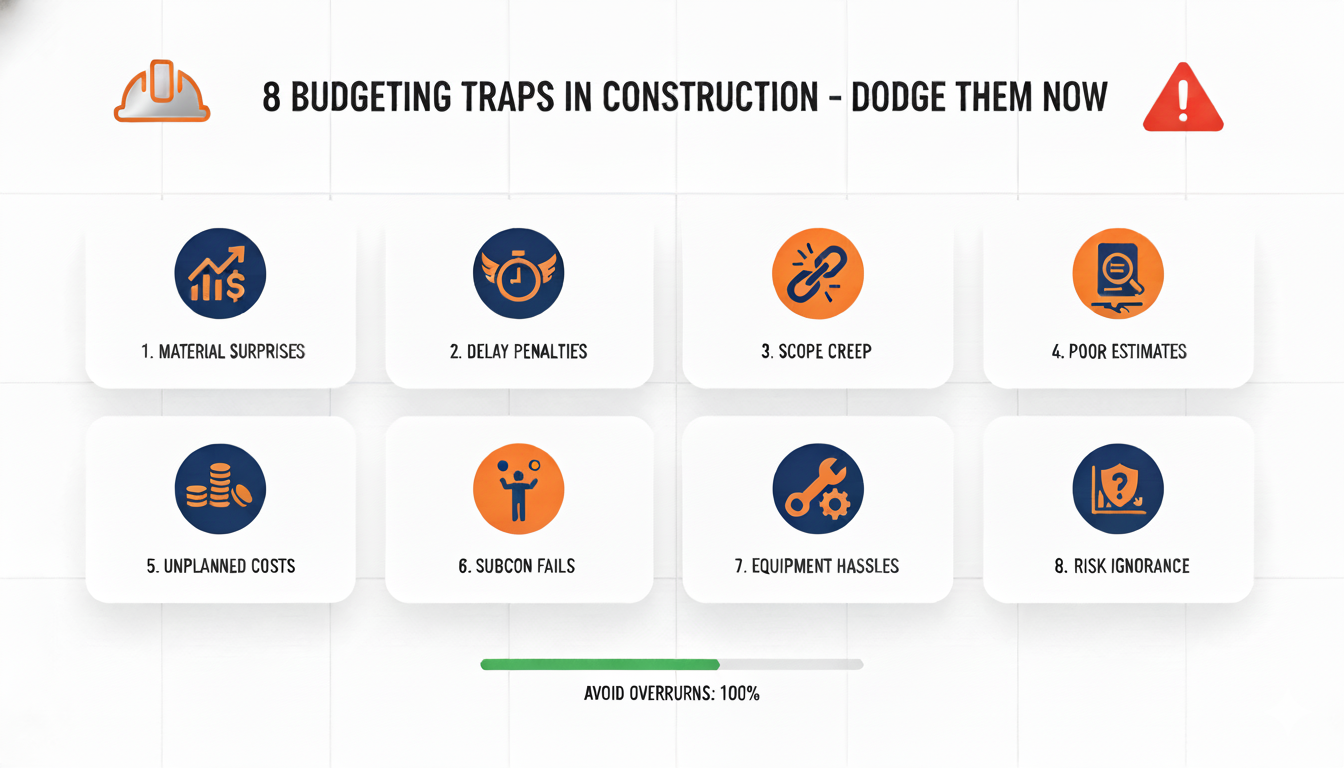
With the National Construction Code tweaks hitting in 2025 and supply chains still jittery from global shifts, nailing your budget feels like walking a tightrope. But here’s the good news: Most overruns stem from the same old traps. Drawing from industry reports and real-world chats with estimators across Sydney to Perth, I’ve rounded up the 10 most frequent budgeting pitfalls in construction projects. We’ll unpack each one with a quick tale from the trenches, why it bites, and straightforward ways to sidestep it. Think of this as your no-BS playbook for tighter estimates and smoother sails. By the end, you’ll spot these red flags a mile off and keep your projects humming.
1. Material Surprises
Quoting timber or steel at yesterday’s price and then watching the invoice arrive like a tax bill. Happens every time the Aussie dollar wobbles or a ship gets stuck somewhere. One Brisbane builder I know got smashed when rebar jumped 28% overnight – suddenly their “tight” margin was gone before the footings were poured. Fix it: Use live pricing feeds (Cordell, Rawlinsons, or even a quick call to your merchant) and slap a straight 12–18% escalation buffer on anything imported. Lock in prices for the big-ticket items the day you win the job.
2. Delay Penalties
Liquidated damages are the silent killer. Miss practical completion by two weeks on a school job and you’re handing the client $15k a day. Rain in Sydney, crane breakdowns, late council approvals – it all stacks up fast. Fix it: Build a proper float into your programme (most blokes allow 5-10% of the contract period) and track progress weekly. If the sky opens up, document everything and claim an EOT straight away.
3. Scope Creep
Just add a bigger deck while you’re there, mate. Next thing you know you’re pouring extra slabs and chasing engineers for approvals you’re not getting paid for. Gold Coast apartments are famous for this. Fix it: Every single change gets a written variation with price and time impact signed off before anyone lifts a finger. No exceptions, no “we’ll sort it later”.
4. Poor Estimates
Rushing the takeoff, missing half the flashings, or measuring walls centre-line instead of face-of-stud. Looks fine on paper until the brickies turn up short 8,000 bricks. Fix it: Slow down, double-check your on-screen takeoff, and always get a second set of eyes on tenders over a million bucks. A couple of extra hours up front saves a fortune later.
5. Unplanned Costs
All the stuff that doesn’t swing a hammer: site toilets, temp power, traffic management, insurance hikes, that random geotech report you suddenly need. They’re only 1–2% each but add up to 12–15% if you ignore them. Fix it: Keep a standard checklist of 40+ indirect items and plug them in every single time. Miss one and it hurts.
Also Read: Climate Resilient Homes New Zealand
6. Subcon Fails
Your sparky goes broke mid-job, the tiler disappears to Bali, or the concreter pours the wrong mix and you have to rip it up. Subbie drama is the number-one reason good builders lose their shirt. Fix it: Vet every subcontractor like you’re hiring family – check references, financials, and never pay more than 10% upfront. Have backup tradies on speed dial.
7. Equipment Hassles
That excavator you hired breaks down for three weeks, the tower crane permit gets delayed, or fuel jumps 30 cents a litre. Plant and equipment can blow the budget faster than you think. Fix it: Get firm hire rates in writing, include breakdown downtime in your programme, and add a 15% contingency on major plant items. Own gear? Double your maintenance budget – it always costs more than you remember.
8. Risk Ignorance
No one wants to talk about contaminated soil, bushfire rating upgrades, or the neighbour who suddenly cares about their view. Ignore the risks and they’ll find you. Fix it: Do a proper risk workshop at tender stage, list everything that could bite you, price it, and either carry it or get it covered in the contract. Ten minutes of worry now saves months of pain later.
Spot these eight early and you’ll finish jobs with money in the bank instead of excuses in the inbox. Simple as that.
Conclusion
Spot these eight budgeting traps early, and you’ll turn potential disasters into smooth-running jobs that actually turn a profit. In construction, it’s not about being perfect—it’s about being prepared. Nail your estimates, stay vigilant on site, and watch those overruns vanish. Your next project’s margin will thank you.
