

Picture this: a busy construction site where machines buzz overhead, robots lay bricks without breaking a sweat, and entire walls rise from a printer like something out of a sci-fi movie. This isn’t far-off fantasy it’s happening right now in the construction world. As we step into 2026, construction technology trends are shaking things up, making builds faster, safer, and cheaper. Homeowners, especially, are tuning in because these changes mean better homes at lower costs. In this piece, we’ll mix real stories from the field with solid facts to show how drones in construction, robotics in construction, and 3D printing in construction are leading the charge. Let’s break it down step by step, starting with the sky-high helpers.
Taking Flight: How Drones Are Changing the Game on Job Sites
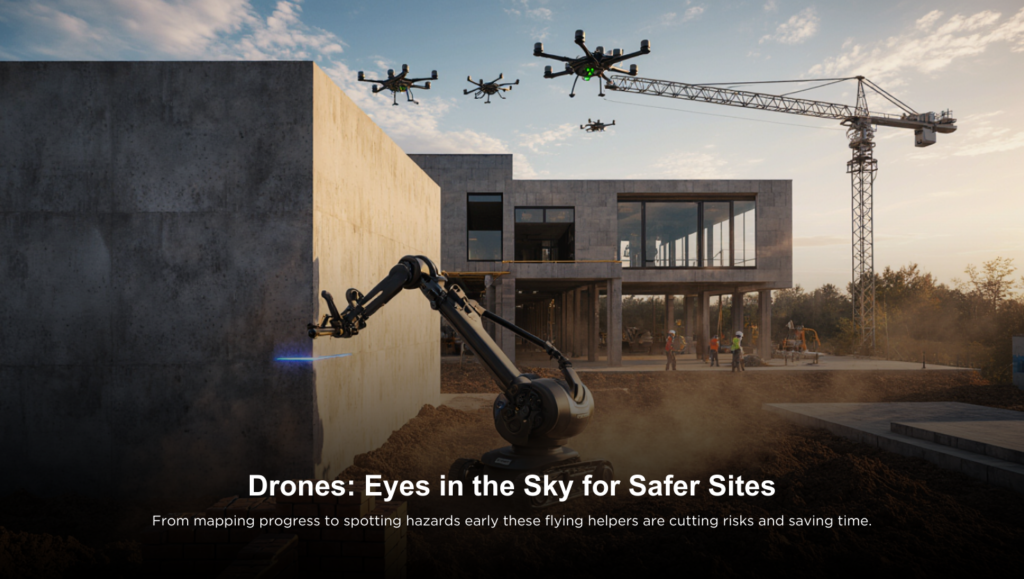
Drones have gone from hobby toys to must-have tools in the construction industry. Think about a project manager who used to climb scaffolds for inspections now, they send a drone up for a quick scan. Drones in construction are boosting safety by keeping workers off risky spots, like high roofs or unstable ground. One study shows they cut site accidents by up to 20% by spotting hazards early. On top of that, drone technology construction helps with mapping and tracking progress. High-resolution cameras capture aerial views, turning them into detailed 3D models that guide the whole build.
Take the story of a mid-sized firm in Auckland that adopted drones last year. They were dealing with delays on a housing project due to bad weather and rough terrain. By using drones for surveying, they shaved weeks off the timeline and saved thousands in labor costs. Drones equipped with sensors can even measure material volumes, like piles of gravel, with pinpoint accuracy. This ties right into bigger construction trends, where efficiency is key. For homeowners planning a renovation, imagine getting real-time updates via drone footage no more guessing if the crew is on track.
But it’s not just about speed. Drones are teaming up with AI to predict issues before they blow up. For instance, thermal cameras spot leaks or weak spots in structures, preventing costly fixes down the line. As we look at 2026, expect more autonomous drones that fly pre-set paths without a pilot, making them even easier for small teams to use. This shift connects to robotics, where machines handle the heavy lifting on the ground.
- Key Benefits of Drones in Construction:
- Enhanced safety: Reduces need for workers in dangerous areas.
- Cost savings: Cuts survey time by 50-70%, per industry reports.
- Better data: Generates accurate maps and progress reports.
- Environmental perks: Monitors site impact, like erosion control.
These advantages make drones a favorite among builders aiming for smarter projects. Now, let’s move to the robots rolling onto sites.
Ground Level Heroes: Robotics Bringing Precision and Power to Builds
If drones rule the skies, robotics in construction own the ground. From bricklaying bots to automated diggers, these machines are tackling jobs that are dull, dirty, or dangerous. Robotics in construction trends for 2026 point to a boom in cobots, collaborative robots that work alongside humans without fencing them off. One standout example is the bricklaying robot that can place 1,000 bricks an hour, far outpacing a human crew. This isn’t about replacing jobs; it’s about filling gaps in a industry short on skilled labor.
Consider a real case from a U.S. highway project where autonomous heavy equipment handled excavation. The robots worked non-stop, boosting output by 40% and cutting fuel use. For homeowners, this means faster home builds with fewer errors. Imagine your new garage going up with robot precision, ensuring every joint is perfect. Construction robotics also shine in prefabrication, where parts are assembled off-site by machines before delivery.
Looking ahead, surveying robots and material handling bots are set to grow. These tie into AI, learning from past projects to optimize paths and reduce waste. In 2026, expect more humanoid robots for complex tasks, like wiring or painting, making sites safer overall. This flows naturally into 3D printing, where robots often drive the process.
- Top Robotics Trends in Construction:
- Cobots for teamwork: Assist in tasks like welding or lifting.
- Autonomous equipment: Digs and moves dirt without drivers.
- 3D printing robots: Build structures layer by layer.
- Safety boosts: Robots handle hazardous jobs, dropping injury rates by 30%.
As robotics evolve, they’re making construction more sustainable too, using less material and energy. This leads us to the next big innovator: 3D printing.
Also Read: DIY Renovation vs Professional NZ: Key Facts
Layer by Layer: 3D Printing Redefining How We Build Homes
3D printing in construction is like baking a cake with a giant printer layer upon layer until you have a solid structure. Advancements in 3D printing construction have sped up builds dramatically. A house that once took months can now rise in days using concrete extruded from a robotic arm. This tech is especially appealing to homeowners because it cuts costs by 20-30% and allows for custom designs without extra hassle.
One inspiring story comes from a Texas community where 3D printed homes went up for low-income families. The printers used recycled materials, making the builds eco-friendly and quick each home done in under a week. Construction 3D printing works by following digital blueprints, depositing material precisely where needed. This minimizes waste, a big win in an industry that tosses out tons of scraps yearly.
In 2026, expect bigger leaps with mobile robots for 3D printing on-site, handling everything from walls to roofs. Materials are improving too think sustainable mixes like geopolymers that are stronger and greener. For commercial projects, 3D concrete printing is moving beyond pilots to full-scale developments, with markets projected to hit billions. Homeowners can look forward to affordable, quake-resistant homes tailored to their needs.
This tech links back to drones and robotics: Drones scout sites for printing plans, while robots operate the printers. Together, they create a seamless workflow.
- Advantages of 3D Printing in Construction:
- Speed: Builds structures 10 times faster than traditional methods.
- Customization: Easy to tweak designs for unique features.
- Sustainability: Uses less material and incorporates recyclables.
- Cost efficiency: Lowers labor needs and overall expenses.
As these layers stack up, the future looks solid.
Blending It All: How These Techs Work Together for Smarter Builds
The real magic happens when drones, robotics, and 3D printing team up. Imagine a site where drones map the land, robots prepare the ground, and printers erect the frame all synced via AI. This convergence is a top trend in emerging construction technologies. For instance, AI and drones in construction spot issues, feeding data to robots for fixes, while 3D printing handles the build.
Homeowners benefit from this combo through modular construction, where printed parts are assembled by robots and checked by drones. It’s faster and more reliable, addressing housing shortages worldwide. Challenges remain, like high upfront costs and training needs, but benefits outweigh them as adoption grows.
Looking to 2026, automation in construction will ramp up, with IoT connecting everything for real-time insights. This interconnected approach makes projects more predictable and less wasteful.
Challenges and the Road Ahead: Making Tech Work for Everyone
No revolution is smooth. High costs for tech like surveying robots or large-scale 3D printers can deter small builders. Plus, there’s the learning curve workers need training to handle cobots or drone software. Regulations are catching up too, especially for autonomous equipment on public sites.
But the payoff is huge: Safer sites, greener builds, and homes that last longer. Governments are pushing incentives, like grants for sustainable tech, to speed things along. For homeowners, this means shopping for builders who use these tools for better value.
Wrapping Up: A Brighter Future Built on Tech
From drones soaring high to robots grinding it out and printers layering perfection, technology is revolutionizing construction in ways we couldn’t imagine a decade ago. These tools aren’t just gadgets they’re solving real problems like labor shortages, high costs, and environmental impact. As a homeowner, staying informed means you can demand smarter builds for your next project. The construction industry trends 2026 promise even more excitement, with AI tying it all together. Whether you’re dreaming of a custom home or just curious, this tech wave is building a better world, one innovation at a time.
