

In the bustling world of New Zealand’s construction industry, where projects range from sleek Auckland high-rises to cozy Christchurch homes, getting things right the first time isn’t just nice it’s essential. With building consents up 3.6% year-on-year as we head into 2026, the pressure is on to deliver efficiently. But here’s the thing: too often, estimators and builders work in silos, leading to costly missteps. Imagine if they teamed up more closely? That’s where real magic happens in project delivery. This article dives into how stronger estimator-builder partnerships can boost construction efficiency in New Zealand, drawing from local insights and examples. Whether you’re a quantity surveyor crunching numbers or a site manager swinging hammers, fostering these ties could be your edge in a competitive market.
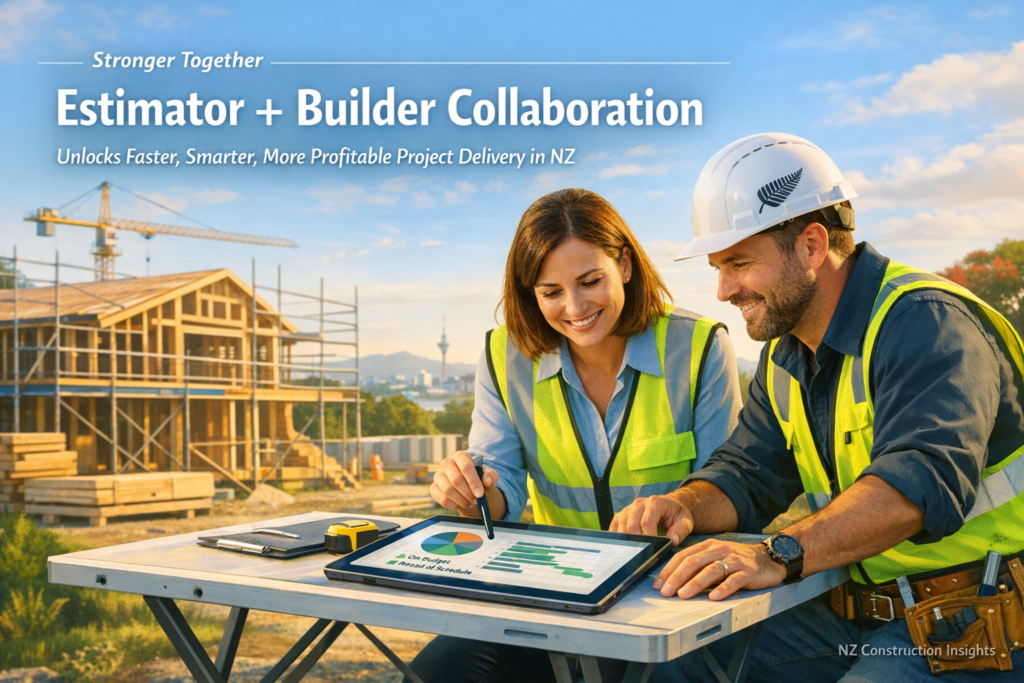
The Key Players: Estimators and Builders in the NZ Construction Landscape
First off, let’s clarify the roles. In New Zealand, estimators often called quantity surveyors are the number wizards. They dive into blueprints, assess materials, labor, and risks to create accurate cost estimations. Think of them as the financial architects of a project, using tools like Buildxact or even spreadsheets to forecast budgets that keep things viable.
Builders, on the other hand, are the hands-on heroes. They’re out there managing crews, sourcing supplies, and turning plans into reality. From residential building construction in Wellington to commercial projects in Hamilton, builders deal with the day-to-day grind, adapting to weather, site surprises, and client tweaks.
But when these two don’t sync? Problems pile up. An underestimated material cost can blow budgets, or a builder’s on-site change might not align with the initial estimate, causing delays. In NZ’s tight market, where labor shortages and rising timber prices are common, this disconnect hits hard. Enter collaboration: it’s about bridging that gap for smoother construction management.
Why Collaboration Matters More Than Ever in New Zealand’s Building Scene
New Zealand’s construction sector is evolving fast. With government pushes for more housing like the 2 million new homes pipeline and sustainability goals like net-zero by 2050, projects are getting complex. Design and build contractors are on the rise, blending planning and execution, but even there, estimator-builder teamwork is key.
Research from the NZ Institute of Building shows that poor communication leads to 30% of project rework. That’s wasted time and money. Collaboration flips this by aligning goals early. For instance, during the estimating phase, builders can input real-world insights on local suppliers or site challenges, refining the building cost estimator’s projections. This isn’t just theory it’s practical for Kiwi firms facing unique hurdles like seismic standards or remote Northland sites.
Plus, with tools like cloud-based software, collaboration is easier. Quantity surveyors in Auckland can share live updates with builders in Otago, ensuring everyone’s on the same page. It’s about turning potential clashes into proactive wins, improving overall project delivery in New Zealand.
Tangible Benefits: How Teamwork Elevates Construction Efficiency
When estimators and builders collaborate, the payoffs are clear and measurable. Let’s break it down.
Better Accuracy in Cost Estimation: Solo estimating often misses nuances. But when builders chime in, estimates reflect actual conditions. A study on NZ house construction supply chains highlights how involving builders early cuts discrepancies by up to 20%. For example, a builder might flag cheaper local alternatives to imported materials, slashing costs without skimping on quality.
Faster Project Timelines: Delays are the bane of construction. Collaborative teams spot issues sooner like incompatible designs or supply hiccups allowing quick fixes. In large projects NZ-wide, this can shave weeks off schedules. Think of it: integrated project delivery means fewer change orders, keeping things humming.
Improved Risk Management: NZ’s weather and regulations add risks. Estimators crunch data, but builders know the ground truth. Together, they build buffers for uncertainties, like escalating carpentry costs or consent delays. This teamwork reduces overruns, with some Kiwi projects reporting 15% savings.
Enhanced Client Satisfaction: Happy clients mean repeat business. When estimates match reality, trust builds. Builders can deliver on promises, and estimators provide transparent breakdowns. In residential building construction, this leads to glowing reviews and referrals gold in local markets like Tauranga or Bay of Plenty.
Sustainability Gains: With green building on the rise, collaboration helps pick eco-friendly materials that fit budgets. Estimators model costs for solar panels or recycled timber, while builders ensure they’re feasible on-site. This aligns with NZ’s renewable targets, making projects future-proof.
Cost Savings Overall: Ultimately, it’s about the bottom line. Effective partnerships can trim 10-25% off total expenses through optimized procurement and waste reduction. For small custom home builders in Hamilton or commercial contractors in Wellington, that’s a game-changer.
- Streamlined Communication: Regular check-ins prevent misunderstandings.
- Innovation Boost: Joint brainstorming leads to smarter solutions, like modular methods.
- Quality Uplift: Aligned teams catch errors early, ensuring top-notch finishes.
In short, these benefits make construction estimating services more reliable and project delivery more predictable.
Also Read: Eco-Friendly Building Materials That Are Changing the Construction Industry in New Zealand
Real-World Kiwi Examples: Collaboration in Action
Let’s look at some local successes. Take Kiwi Built, a NZ firm specializing in home renovations. They emphasize close ties between their estimators and builders. In one project, detailed collaboration with subcontractors led to precise quotes, avoiding mid-build surprises. The result? A Bay of Plenty renovation finished under budget and ahead of schedule, with the client raving about the seamless process.
Another gem: The supply chain collaboration study in NZ house construction. It gathered views from manufacturers, suppliers, architects, and homeowners, showing how integrated teams reduce waste. One case involved a Christchurch rebuild post-quake, where estimators and builders worked hand-in-hand to incorporate seismic upgrades without inflating costs. By sharing data on material sources, they cut delivery times by 25%.
Nebulite, a window supplier, shares tips for fostering relationships in NZ construction. They advocate using technology for collaboration like shared digital platforms to simplify workflows. In a recent Auckland commercial build, this approach helped estimators and builders coordinate installations, dodging delays from mismatched timelines.
Even larger outfits like Fletcher Building highlight estimator-builder synergy in their reports. For a Wellington infrastructure project, early involvement of builders in estimating trimmed transaction costs, as per Emerald research on NZ procurement. The outcome: Efficient resource allocation and on-time completion.
These examples prove that in New Zealand’s diverse building landscape from urban hubs to rural spots partnerships drive real results.
Overcoming Challenges: Building Stronger Ties
Of course, collaboration isn’t always smooth. Common hurdles include time constraints, differing priorities, or tech barriers. Estimators might focus on numbers, while builders prioritize practicality.
Solutions? Start with clear communication protocols. Regular meetings or shared apps like Procore can bridge gaps. Training helps too workshops on construction management NZ-style, emphasizing teamwork.
Cultural shifts matter. Encourage a “we” mindset over “us vs. them.” Incentives like shared bonuses for on-budget delivery motivate alignment. For smaller firms, outsourcing to specialist construction estimating services can ease the load, allowing in-house builders to focus on execution while collaborating remotely.
In NZ, where quantity surveyors are regulated pros, leveraging bodies like the NZ Institute of Quantity Surveyors for best practices adds credibility.
Fostering Partnerships: A Subtle Nudge Forward
So, how do you start? It’s simpler than you think. Reach out to complementary pros estimators teaming with local builders, or vice versa. Joint ventures on bids can test waters without big commitments. Consider networking events through Master Builders or similar groups. Sharing a coffee to discuss a potential project could spark ongoing collaboration.
Tools like Buildxact promote this by enabling real-time data sharing, making partnerships effortless. The subtle truth: In a market craving efficiency, these alliances aren’t just helpful they’re smart business. They turn competitors into allies, expanding reach for bigger gigs.
Wrapping Up: The Future of NZ Construction Lies in Unity
As New Zealand’s building boom continues, with forecasts of 4% annual growth from 2026, embracing collaboration between estimators and builders isn’t optional it’s vital for superior project delivery. From sharper cost estimations to timely completions, the benefits ripple through every phase.
If you’re in the industry, think about your next move. A simple chat with a potential partner could unlock efficiencies you never imagined. After all, in Kiwi construction, we’re stronger together.
