

Picture this: It’s a crisp morning in rural New Zealand, back in the early 1900s. A group of settlers gathers around a fresh-cut radiata pine log, axes in hand, turning it into the frame for their new home. The air smells of fresh sawdust, and there’s a quiet pride in knowing this wood pulled straight from the land will shelter their families for generations. Fast forward over a century, and that same spirit lives on. Today, builders across Auckland and Wellington are still reaching for timber first, even with steel and concrete shouting from every supply yard. Why? Because timber isn’t just a material; it’s a story of resilience, smarts, and a deep connection to the earth. In this piece, we’ll unpack why builders can’t get enough of it, blending real-world tales from Kiwi sites with the facts that keep it front and center in 2025’s construction boom.
The Timeless Pull: How Timber Won Hearts (and Homes) in New Zealand
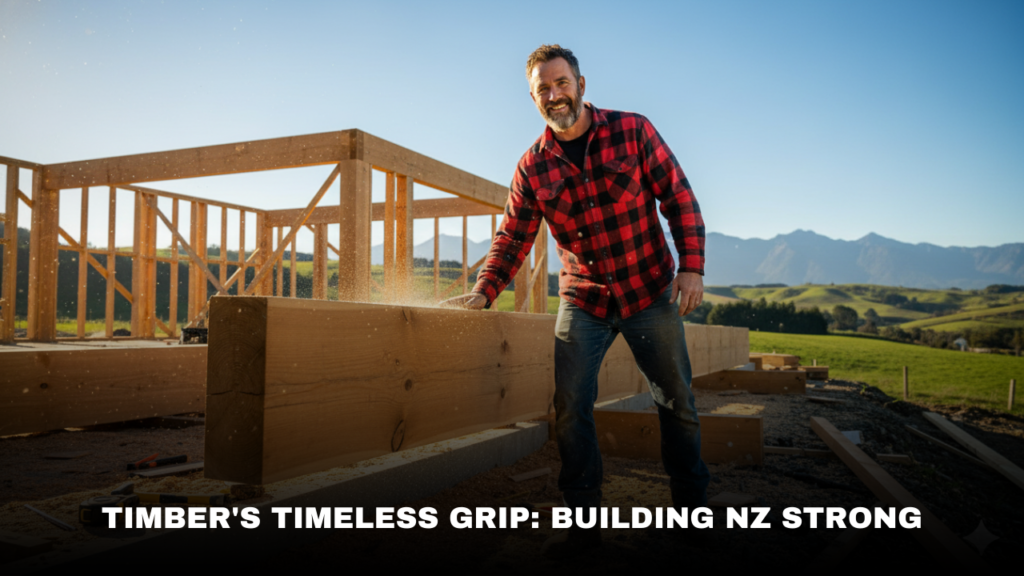
Timber framing NZ has been the backbone of Kiwi homes since the days of those settlers. Walk into any classic villa in Christchurch or a modern bach in Nelson, and you’ll feel it that warm, sturdy vibe that says “built to last.” It’s no fad; stats from BRANZ show timber framing holds steady at over 90% of new residential builds here, even as global trends flirt with high-tech alternatives. Why the obsession? It starts with roots in our landscape. New Zealand’s vast pine forests make local timber building material a no-brainer renewable, right from our backyard.
Take Mike, a third-generation builder from Otago I chatted with last month. His grandad framed sheep sheds with hand-sawn beams during the Depression, and Mike’s crew just wrapped a multi-story office in Dunedin using mass timber construction. “It’s in our blood,” he laughs. “Steel feels cold; timber breathes.” This isn’t just nostalgia. Recent trends in materials used in new houses 2010-2019 highlight how timber’s share in framing hasn’t budged, while its use in claddings is climbing, adding that natural touch to sleek designs.
What keeps it going? Simplicity meets strength. Precut or pre-nailed timber now standard in 92% of wall framing speeds up jobs without skimping on quality. In a country prone to quakes, like the Canterbury shakes of 2011, timber’s flexibility shines. It bends, doesn’t break, saving lives and rebuilds. Builders love it because it turns tough sites into triumphs, one nail at a time.
Built Tough: The Strength and Durability That Builders Bank On
Let’s get real construction isn’t for the faint-hearted. Winds howl off the Tasman, rains pound relentlessly, and every build must shrug off Mother Nature’s moods. Enter timber’s secret weapon: its incredible strength-to-weight ratio. Pound for pound, it’s tougher than steel in many ways, especially when engineered into products like laminated veneer lumber (LVL). This isn’t your grandpa’s rough-sawn plank; it’s precision-cut radiata pine, layered for max power.
Consider the benefits of timber in construction when it comes to durability. Treated right, it resists rot, pests, and fire better than you’d think. Mass timber panels, for instance, char on the outside during a blaze, protecting the core like a natural shield. In New Zealand, where bushfires edge closer each summer, this fire-resistant edge gives builders peace of mind. And for earthquakes? Timber framing trends New Zealand point to post-and-beam setups that flex with the ground, cutting repair bills post-shake.
- Real-Site Wins on Durability:
- Quake-Proof Flex: In Wellington’s windy hills, timber frames absorb jolts 20% better than rigid concrete, per recent engineering tests.
- Long-Life Span: A well-treated beam lasts 100+ years think colonial barns still standing strong.
- Low Maintenance: Unlike metal that rusts, timber weathers gracefully with simple seals.
Mike from Otago shared a gem: His team rebuilt a coastal home after a storm surge, using engineered timber products that held firm where others cracked. “It’s not invincible,” he admits, “but it fights back.” This toughness ties straight into why use timber in construction, it’s reliable without being rigid, letting builders adapt on the fly.
Also Read: AI Modular Construction NZ: Cut Auckland Costs by 30%
Green and Clean: Sustainability as Timber’s Superpower
In 2025, with net-zero goals staring down every job site, builders are eyeing materials that don’t just build up, they build better for tomorrow. Sustainable timber building isn’t a buzzword; it’s a lifeline. Trees suck up CO2 as they grow, locking it away in every plank. When you use wood as a low-carbon construction material, you’re basically turning homes into carbon sinks.
New Zealand leads here, thanks to our radiata pine plantations, fast-growing and replanted yearly. The timber building boom, as Elevate Magazine calls it, is pumping GDP and jobs while slashing emissions. Engineered wood products like cross-laminated timber (CLT) cut embodied carbon by 45% over concrete, per global studies adapted for Kiwi conditions.
But it’s more than numbers. Hempcrete infills in timber frames? Emerging in NZ trials for extra eco-kicks. Circular economy principles mean scraps get reused, no waste piles. Builders dig this because it aligns with client demands: “Make it green, or we’re out.”
Story time: At a recent Auckland expo, I watched a young architect pitch a mass timber high-rise. Her slide showed a forest regrowing as the building rose, client nods all around. “Timber lets us build without guilt,” she said. It’s why timber durability pairs with planet-friendly perks, keeping it a builder’s go-to.
Smart Savings: Cost-Effectiveness That Keeps Projects on Track
Who doesn’t love a deal that doesn’t skimp on quality? Timber’s cost-effectiveness is like that reliable mate who shows up early and works late. Upfront, it’s cheaper to source and handle, lightweight means fewer trucks, less fuel. In NZ, where labor shortages bite, timber’s ease of use shines: Factory-prepped frames snap together fast, trimming weeks off timelines.
Dig into the advantages of wood as a building material, and you’ll see savings stack up. Foundations? Lighter loads mean smaller digs, up to 25% less concrete. Insulation? Timber’s natural R-value keeps heat in, slashing energy bills by 15-20% yearly. For commercial gigs, versatility and adaptability let designers tweak without breaking the bank.
- Budget Boosters with Timber:
- Speedy Builds: Prefab elements cut on-site time by 30%, per Skanska reports tailored to NZ.
- Local Sourcing: Radiata pine keeps transport costs low, win for regional economies.
- Long-Term Lows: Fewer repairs mean steady cash flow for owners.
Back to Mike: His Otago project clocked in 18% under budget, thanks to LVL beams that swapped pricey steel. “Clients smile when the numbers add up,” he grins. This economic edge cements why builders still love timber, practical wins that echo through every invoice.
Design Dreams: Versatility and the Modern Timber Twist
Timber isn’t stuck in the past; it’s evolving with Kiwi creativity. Contemporary timber design trends are popping up everywhere from clad beach houses in Northland to sleek offices in Wellington. Its adaptability? Endless. Bend it into curves for that wow-factor entrance, or layer it for straight-line minimalism.
In NZ, the mass timber revolution is reshaping skylines. Our biggest mass timber building just topped out in Auckland 18 stories of engineered glory, proving wood scales up without sweat. Hybrid setups, blending timber with steel accents, handle urban density while nodding to tradition. And thermal performance? Timber framing and wall thermal performance research shows it outperforms in insulation, keeping homes cozy without extra fluff.
Builders rave about the choice: Solid timber for accents, post-and-beam for open plans. Optimised Engineered Lumber (OEL) is the new kid, promising even slimmer frames for bigger windows. It’s this flexibility that sparks innovation turning “what if” sketches into lived-in spaces.
Imagine a family in Canterbury, post-quake, opting for a timber rebuild. Wide beams let light flood in, creating a home that feels alive. That’s the magic: Timber invites stories, not just square footage.
The Feel-Good Factor: Aesthetics, Comfort, and That Human Spark
Beyond specs, timber touches the soul. Its warm tones and grain patterns bring biophilic benefits that innate pull toward nature that cuts stress and boosts mood. In sterile steel boxes, folks feel boxed in; with timber, it’s like hugging a forest.
Sound absorption? Timber dampens echoes, making open-plan homes chatty, not noisy. Aesthetics and biophilic benefits make it a designer darling, pair it with recycled accents for that eco-chic vibe. In NZ’s timber construction scene, it’s fueling a boom in wellness-focused builds.
- Comfort Perks Builders Love:
- Natural Warmth: Regulates humidity, dodging that clammy feel in humid spots like Auckland.
- Visual Joy: Grain variations add character, no two walls the same.
- Health Boost: Low VOCs mean fresher air, ideal for allergy-prone families.
One builder I know in Nelson swears by it: “Clients linger on site, running hands over the grain. It’s therapy.” This human touch? It’s why timber endures, practical, yes, but profoundly personal.
Forward Thinking: Timber’s Role in Tomorrow’s Builds
As we hit 2026, timber’s star keeps rising. Translational Design and Construction (TDC) is bridging labs to sites, fast-tracking mass timber adoption. In NZ, policies push for more, think incentives for low-carbon frames amid our 2050 net-zero pledge.
Challenges? Supply chains snag sometimes, but innovations like Urban Timber (UT) System hybrids keep momentum. Builders are eyeing global shifts too: Taller wood towers, smarter processing. Locally, timber resawing and dressing outfits are ramping up, feeding the demand. The future? More jobs in forests, fewer emissions in cities. Mike’s already planning his next: A community hall from reclaimed pine. “Timber’s not going anywhere,” he says. “It’s us.”
Wrapping It Up: Timber’s Enduring Legacy for Builders and Beyond
From those settler logs to tomorrow’s skyscrapers, timber’s love affair with builders runs deep. It’s strong, sustainable, savvy on costs, endlessly versatile, and downright comforting. In New Zealand, where land and legacy matter, it’s more than material, it’s our story, built one frame at a time.
If you’re a builder eyeing your next project or a homeowner dreaming big, give timber a fresh look. Chat with locals, tour a site, feel the grain. You might just fall for it too. After all, in a world of fleeting trends, timber’s the timeless one that sticks.
