

New Zealand homes face tough weather rain, wind, earthquakes, and sun in different spots. Picking the right cladding helps protect your house, keeps it looking good, and saves money on fixes later. In 2026, builders and homeowners focus on durable, low-maintenance options that meet building rules and handle our climate well.
Here are the top 5 cladding options popular right now in New Zealand, based on real trends from builders, recent reports, and market use. These come up most in new builds and renovations.
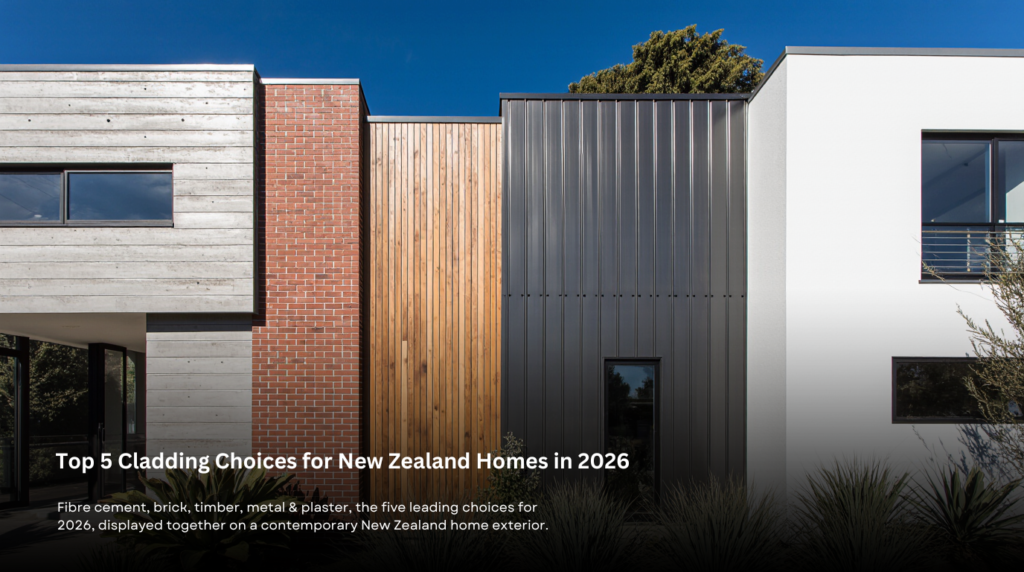
1. Fibre Cement Cladding (like James Hardie Linea or Axon)
This is one of the most used options today. It’s made from cement, sand, and fibres, shaped into boards or panels.
- Why it’s popular: Very tough against rain and rot. Low upkeep just paint every 10-15 years. Good for dark colours without warping. Meets NZ building code for weather-tightness easily.
- Best for: Most parts of NZ, including coastal areas like Auckland. Modern or classic looks.
- Cost range (2025-2026 estimates, installed per m²): $120–$220.
- Pros: Fire-resistant, long-lasting (30+ years), lighter than brick.
- Cons: Needs good installation to avoid issues.
- Many new homes pick this because it’s reliable after past leaky building problems.
2. Brick Cladding (Brick Veneer)
Brick has been a Kiwi favourite for years think classic “brick and tile” homes.
- Why it’s popular: Super durable, great insulation, fire-proof, and holds value. Low moisture soak-up.
- Best for: Anywhere, but shines in windy or wet spots. Timeless style.
- Cost range: $150–$300 per m² installed.
- Pros: Almost no maintenance, lasts 50+ years, adds strength.
- Cons: Heavier, so needs good foundations. Higher upfront cost.
- Still one of the most trusted choices for long-term homes.
3. Timber Cladding (Weatherboards or Vertical Boards)
Natural wood like cedar, pine, or treated options (e.g., Abodo Vulcan).
- Why it’s popular: Warm, natural look that fits NZ style baches to modern homes. Versatile for painting or staining.
- Best for: Rural or coastal spots if treated right. Adds character.
- Cost range: $100–$250 per m².
- Pros: Renewable, good insulation, easy to repair.
- Cons: Needs regular painting or oiling (every 5-10 years) to stop weathering.
- A classic pick, still strong in 2026 for that real Kiwi feel.
4. Metal Cladding (Steel or Aluminium, like Colorsteel)
Sheets or panels, often profiled for strength.
- Why it’s popular: Tough against wind and corrosion (especially coated versions). Quick to install, lightweight.
- Best for: Coastal or high-wind areas. Modern industrial looks.
- Cost range: $130–$280 per m².
- Pros: Very durable (up to 50-80 years for good steel), low maintenance, recyclable.
- Cons: Can dent or look plain without design.
- Growing fast for sheds and homes in exposed spots.
Also Read: Construction Technology Trends: Drones, Robots & 3D Printing
5. Plaster or Concrete Systems (Stucco, EIFS, or Monolithic)
Smooth render over base like polystyrene or fibre cement.
- Why it’s popular: Clean, modern seamless finish. Good for curves or details.
- Best for: Contemporary designs, urban areas.
- Cost range: $140–$260 per m².
- Pros: Insulating, fire-resistant if done right, flexible looks.
- Cons: Must have cavity and good install to stop water issues (lessons from 1990s-2000s).
- Newer systems are much better and code-compliant.
Quick Comparison Table
| Rank | Cladding Type | Approx. Cost (installed/m²) | Maintenance Level | Durability (years) | Best Climate Fit |
|---|---|---|---|---|---|
| 1 | Fibre Cement | $120–$220 | Low | 30+ | Most of NZ |
| 2 | Brick | $150–$300 | Very Low | 50+ | All areas |
| 3 | Timber | $100–$250 | Medium-High | 20-40+ | Inland/Coastal (treated) |
| 4 | Metal | $130–$280 | Low | 40-80 | Coastal/High Wind |
| 5 | Plaster/Concrete | $140–$260 | Low-Medium | 30+ | Urban/Modern |
What’s Happening in the Market in 2026?
Recent data shows cladding prices edged up in late 2025 (proprietary systems +5%), due to material costs. Trends lean toward low-maintenance and sustainable picks fibre cement and metal are rising because they last long and need less care. Brick stays steady for value. Timber holds on for looks, but people treat it better now.
The “best” one depends on your home: budget, location, style, and how much upkeep you want. Always check with a builder or BRANZ for your area, and make sure it meets the latest NZ Building Code for weather and fire.
Pick smart, and your home will stay strong through NZ’s changing weather.
